Replacing cracked or sinking concrete
A driveway, walk or set of steps that's cracking, sinking or holding water usually has a problem underneath, so replacing it starts with what the slab sits on.
Discuss your projectK&R Somerville Concrete Construction works for homeowners, landlords and businesses around the city, and we put our time into the ground under the slab first, because concrete is hard to undo once it's poured.
Most concrete calls come down to one of two things, a slab that's wearing out or a part of the property you'd like to put to better use.
A driveway, walk or set of steps that's cracking, sinking or holding water usually has a problem underneath, so replacing it starts with what the slab sits on.
Discuss your projectA patio, a parking pad or steps that fit the yard can turn a small city lot into space you use, as long as the water still runs away from the house.
Discuss your projectI come out to look at the job myself and stay on it through the work, so what we agreed at the estimate is what gets built, and you understand the plan first.
We work out where rain will run before we set a single form, so the new slab pitches away from your house instead of sending water toward the foundation.
We check with the city's building office before we settle the plan, then file what's ours to file and tell you what to bring, so permits don't stall the job halfway.
K&R Somerville Concrete Construction is a concrete contractor in Somerville, MA, and we handle 16 kinds of work, from flatwork, the driveways, walks and patios that lie on the ground, to footings and foundations. The price mostly turns on the size of the job, how much old concrete comes out, how much digging and packing the base needs, how a truck reaches the spot and the finish you pick. The schedule turns on the permit if your job needs one, on the weather, since heavy rain or a hot afternoon can push a pour back, and on curing, the days new concrete needs to harden before you use it. I measure on site, talk it through with you and then send the estimate.
New driveways on city lots, dug out and packed down to a firm base first, so the slab doesn't settle with the dirt and start cracking a few winters in.
Backyard patios pitched so rain runs away from the house, with control joints cut in early so cracking tends to follow a line we picked, not wander.
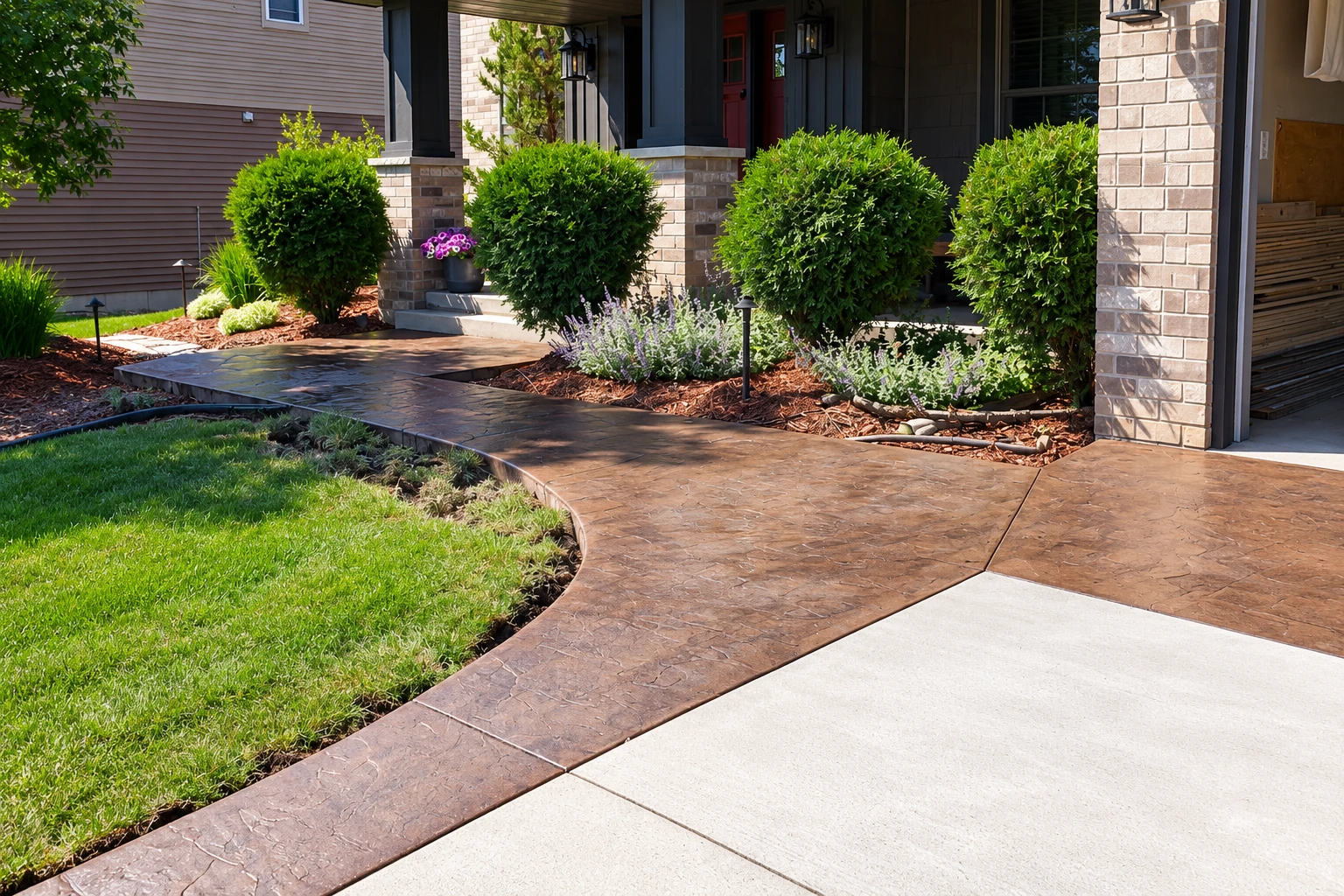
Stamped concrete pressed with a pattern and color while it's still soft, for a patio or walk that looks like stone or brick but pours as one slab.
Front walks and side paths with a broom finish, a light brushed texture that gives your shoes some grip when it's wet or icy.
Garage floors poured thick enough for a car and set with a slight fall toward the door, so melting snow off the tires drains out instead of pooling.
Colored, stained or textured concrete for owners who want the surface to match the house, with the finish picked out together before pour day so you know what you're getting.
Concrete walls that hold back soil where a yard steps down, with drainage built in behind them so water pressure doesn't push the wall over time.
Interior floors for basements, workshops and commercial spaces, poured over a packed base with rebar where the load calls for it, so the steel keeps any crack from pulling apart.
Decks around in-ground pools, finished with enough texture for wet bare feet and sloped so splash water drains away from the pool and the house.
Front and back steps formed to even, comfortable rises, a job we do often on older city houses where the old steps have cracked, settled or pulled away.
Slab foundations for additions, garages and sheds, with the subgrade, the ground the slab sits on, dug out and compacted before we pour so it has firm support.
Poured foundation walls for new homes and additions, laid out with the drainage and the city's sign-off in mind before the first form goes up.
Parking areas for small businesses, apartment buildings and rental properties, graded so water runs off where you want it and laid out around how cars actually turn in.
Footings, the buried concrete that carries the weight of a deck, porch or addition, dug to the depth the job needs and poured on firm, undisturbed ground.
Lifting and leveling a foundation or slab that has settled, after we look at what caused the sinking, since lifting it without fixing the cause just buys time.
Clean cuts through existing slabs and walls for a new doorway, a drain line or a section that needs replacing, with the dust and mess kept under control for the neighbors.
I poured concrete in my twenties, spent a good stretch of years away from the trade and came back in 2013 to start K&R, because I missed building things that stay put. Coming back later meant relearning the work slowly, alongside people who'd never left it, and I still work that way, checking instead of guessing.
We're fully licensed and insured, and the promise we make is satisfaction guaranteed on every job. Most of our calls come from homeowners and small landlords who want one steady person to deal with, and you can read more about me and our crew.
Our crew does the digging, forming, pouring and finishing, and we line up the other licensed trades a job needs, so you're not chasing separate schedules yourself.
We work on tight city lots every week, so truck access, parking and a word with the neighbors are sorted out before the concrete truck shows up.
I want the yard, the sidewalk and the street cleaner when we leave than when we arrived, so you stay on good terms with the people next door.
Send the form and we'll reply within one business day to set a time. I come out, measure, talk the job through with you and then send the estimate, free and with no obligation.
A line about the cracks, sinking or pooling water, or the space you want to use, helps me know what to look at and measure when I come out.
The estimate comes after I've seen the ground, the slope and the access, because those don't show up in a photo and I'd rather check than guess.
Call (617) 284-0921, Monday to Friday from 8 AM to 11 PM or weekends from 6 AM to 10 PM, and we'll set up a time to come out.
A few examples of broom, stamped and decorative finishes, plus driveway and patio layouts, so you can point at what you like before we talk.
Straight answers to the questions people ask first about concrete work in Somerville, from permits to how long you're off the driveway.
Usually, yes. Somerville's Inspectional Services requires a permit for all interior and exterior work on a house except painting, tiling and flooring, and it has to be posted at the job before work starts. If you're unsure where your job falls, call them at 617-625-6600 ext. 5600. We check with the city early on every job, before we settle the plan.
You can if you own and live in a one- or two-family house. For a building with three families or more, a licensed contractor has to apply for and get the permit. When the paperwork is ours to file, we file it and keep it moving, and when it's yours, we tell you what to bring.
Yes, for most work on an existing home with one to four units that the owner lives in. The state requires those contractors to register as Home Improvement Contractors, which is separate from a construction supervisor license. The registration number belongs on the permit, the contract and their ads, and home work estimated at $1,000 or more needs a written contract.
It can still crack, since concrete does, but most bad cracking starts with a base that was raked level instead of dug out and packed, or joints cut late. Control joints are shallow cuts that give cracks a straight line to follow. If a budget needs trimming, I'd rather simplify the finish than skimp on the ground underneath.
Longer than you'd wait to walk on it, and I'll tell you both waits for your job before we pour. Curing, the stretch while new concrete hardens and gains strength, depends on the weather and the mix, and a car puts far more weight on it than feet do. Driving on it early can crack or mark a slab before it's ready.
Call (617) 284-0921 or contact us online for a free on-site estimate, and we'll sort out the plan and permits before the pour.