Back patios on small yards
A stamped patio gives a small back yard one finished surface instead of loose pieces that shift, and on a tight lot we plan how the truck gets in before anything is dug.
Old patio or driveway cracked and tired? We pour stamped concrete over a packed base, so the pattern sits flat and sheds water.
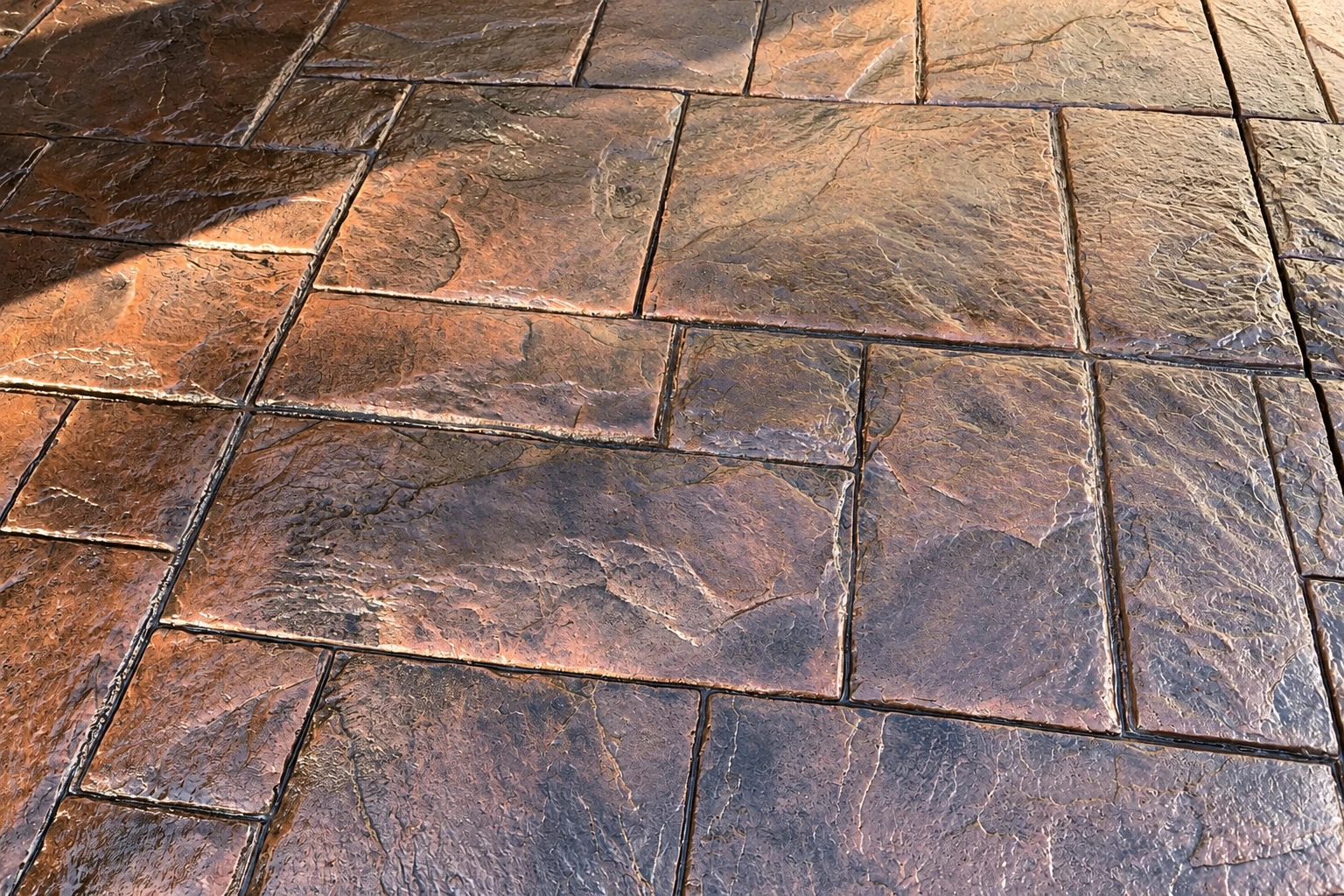
Stamped concrete is concrete paving pressed with a pattern while it's still workable, and at K&R Somerville Concrete Construction we pour it for patios and driveways in Somerville, MA, so you end up with paving that looks finished instead of like a plain slab.
The price mostly moves with the size of the area, the style or design you pick, how much digging and base work your ground needs, and how easy it is to get a truck and tools onto a tight city lot. The schedule turns on the city's permit, the weather and curing, which is the wait while the concrete hardens before you use it. I come out, measure, talk it through with you and then send the estimate with your own figure.
The state's home improvement guidance lists installers of ground-level patios and driveways among those who don't need Home Improvement Contractor registration, and we're fully licensed and insured. We also check with the city's building office early on every job, before we settle the plan.
I look at your job myself, measure it and stay on it through the pour, so the person who made the plan is the one making sure it gets built that way.
Concrete is hard to undo, so I'd rather spend the extra time digging out, packing the ground and setting the slope than come back later to a sunken, cracked pattern.
Trucks, forms and dust land close to the neighbors on tight city lots, so we keep the work contained and leave the site cleaner than we found it. Satisfaction guaranteed on every job.
Most cracked or sinking slabs I get called about failed underneath, not on top. The dirt was raked level instead of dug out and packed, so the slab settled right along with it. We dig down to firm ground, pack a stone base over the subgrade, the soil the slab sits on, and set the slope so water runs away from your house instead of toward the foundation. That base is hidden the day we pour, which makes it the first thing people want to cut from a budget. I won't cut it, because a nice pattern on a soft base just cracks in a nicer-looking way.
On pour day we work around the heat, since concrete finished in the midday sun can end up with a weak, dusty top. We press the pattern while the surface is still soft, cut control joints, shallow grooves that give the slab a chosen place to crack, and let it cure before anyone walks on it. Then comes the sealer, which is a big part of the look on stamped work. A topical sealer that sits on the surface deepens the color, while most penetrating sealers add none and generally need fully cured concrete, so we talk through how much color you want before we pick one.
Stamped areas usually meet plain concrete somewhere. A path from a stamped patio out to the street can tie into our concrete sidewalk building work, and a stamped driveway usually stops at a garage, where garage floor concrete is poured smooth instead. We plan those edges together, so the heights and joints line up.
A stamped patio gives a small back yard one finished surface instead of loose pieces that shift, and on a tight lot we plan how the truck gets in before anything is dug.
A front driveway is what people see from the sidewalk, so stamping it makes sense if you want more than a plain slab. It also carries cars, so it gets a heavier build.
If your old patio or driveway is cracked, sinking or chipping, we break it out and start over on a new base, because new concrete poured over a failing slab inherits its problems.
If rain pools on your patio or runs back toward the house, the new slab is the chance to fix the slope, so water heads for the yard instead of your basement.
Send the form and we'll reply within one business day to set a visit. I come out, measure, talk it through with you and then send the estimate, with no pressure to book.
Tell us which you're planning, because a driveway carries cars and a patio carries people, and that changes how deep we dig and how we build the base.
A rough length and width is plenty, since size is one of the biggest things that moves the price, and I'll take exact measurements when I come out.
Photos of the old slab, the yard and the way in from the street show me cracks, slope and access before the visit, so we can spend that time on your plan.
Example finishes and layouts for patios, driveways and walkways, to give us something to point at when we talk through your own job.
These are the questions we hear most about stamped concrete in Somerville, from price and permits to sealing and the first winter.
Stamped concrete in the Boston area usually costs about $10 to $25 per square foot, which is the market's range, not our quote. Where a job lands depends on labor rates, the style or design, the size of the area and local factors, plus how much base work your ground needs. I'll give you your own figure after measuring on site.
Yes, if it covers more than 30 square feet. The city requires an Engineering Site Construction permit for building pavement over that size, patios included. We check with the city early, before we settle the plan. When the paperwork is ours to file, we file it and keep it moving, and when it's yours, we tell you what to bring.
Yes. The city requires a Driveway & Pavement Permit to build, expand, repave or remove a driveway, and work can't start until it's issued. New or larger paving needs twice the usual runoff measures, such as draining to a landscaped area, a drywell that stores water or permeable pavement, or an engineer's review instead. A new or changed curb cut needs its own permit.
Reseal it when it needs it, not on a calendar. Industry guidance says to reseal once the surface stops shedding water or stains or loses its depth of color, because extra coats build up and are slow and costly to strip, so a yearly high-gloss reseal can cause trouble. We reseal only when the surface starts to dull or soak up water.
Not the first winter. Concrete industry guidance says to skip deicing chemicals that first season, then use them in moderate amounts. It also says dense concrete with entrained air, tiny bubbles in the mix, along with good curing, cuts the risk of scaling, the top flaking off, so ask any installer about their mix and curing plan.
You can, but the patch will show. Concrete industry guidance notes that repair material won't match the color and character of the original concrete, so a patched spot stands out. That's why we'd rather put the time into the base and the joints up front than count on repairs later.
Permits and runoff plans take time before anyone digs, so call (617) 284-0921 or send the form early with photos of the spot.