Parking behind a multi-family house
Small landlords often want a few spaces off the street for tenants, and on a tight city lot that means fitting the slab, the runoff and the property lines together carefully.
Gravel lot rutting, puddling or turning to mud every spring? We build a concrete lot that drains where it should and lasts.
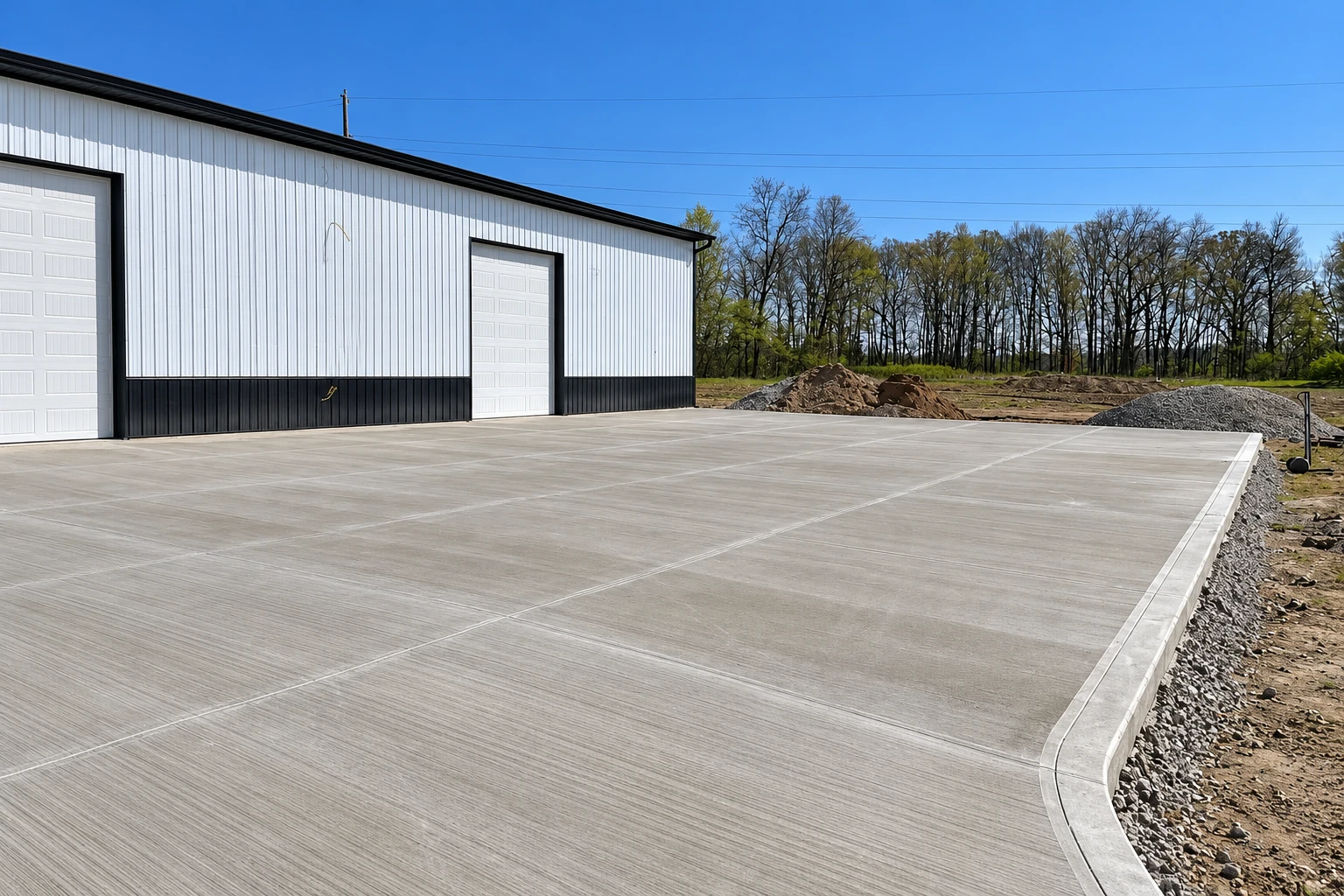
Concrete parking lot building in Somerville means putting down a new paved area for cars on your property and planning where the rain that runs off it goes, because the city looks at both before anything is poured.
The price comes down to the size of the lot, what's there now that has to come out, how much base the ground needs, how the runoff gets handled and whether the lot serves the public and needs accessible spaces. The schedule mostly turns on the city's permits and the weather. I come out, measure and walk through the plan with you, and the estimate puts your own numbers on it.
We're fully licensed and insured, and we check with the city early, before we settle the plan, because a new paved area needs its own permits. When the paperwork is ours to file, we file it and keep it moving, and when it's yours, we tell you what to bring.
I come out to look at the lot myself and I stay on it through the work, so you're dealing with one steady person instead of a new face every visit.
Most of our calls come from homeowners and small landlords around Somerville who want one person to deal with and a plan they understand before a single truck shows up.
Our crew does the digging, forming, pouring and finishing, we line up the other licensed trades the lot needs, and we leave the site cleaner than we found it.
A lot starts underneath. We dig out to firm ground and pack a stone base, because the subgrade, the soil the slab sits on, is what keeps it from settling and cracking later. If the budget gets tight, the base is the last place I'd cut, since nobody sees it on pour day and you can't fix it without breaking the slab out. Runoff is part of the plan from the first sketch, so the surface falls away from your building and toward wherever the water is meant to go. If the lot needs concrete footings for a light pole, a fence or a low wall along the edge, we pour them as part of the same job, and if the building beside the lot has settled, we'll talk about foundation raising before new concrete goes in against it.
We use air-entrained concrete, which has tiny air bubbles worked into it so freezing water and deicing salt don't flake the top off. Those bubbles cost the concrete some strength, so we balance the mix for a lot that has to carry cars and still get through a Somerville winter. We cut control joints, shallow grooves that tell the slab where to crack, before it picks its own spots, give it a broom finish so tires and boots grip when it's wet, and protect it while it cures, the slow hardening that makes it strong.
If the public will use the lot, we lay out accessible spaces from the start, because the state's Architectural Access Board rules cover buildings and facilities open to the public, and those spaces are hard to fit in after the pour. The city requires erosion control around every site, like silt socks or a silt fence, so we set that up first, and we keep the loud work inside the city's allowed construction hours so you're still on good terms with the neighbors.
Small landlords often want a few spaces off the street for tenants, and on a tight city lot that means fitting the slab, the runoff and the property lines together carefully.
A business lot sees more daily traffic and more plowing than a driveway, so the mix, the base and where the snow gets pushed all go into the plan.
Cracked, patched asphalt or gravel that ruts and puddles usually has a tired base underneath, so we dig out what's failing instead of pouring new concrete over it.
Extending a lot means matching grades with what's already there and handling the extra runoff the new pavement makes, so the old and new sections drain together.
Send the form and we'll reply within one business day to set a time. I come out, measure and talk the plan through with you, then send a free estimate with no pressure to book.
A rough count of spaces or the length and width you have in mind is plenty, because it tells me how much digging, base and concrete we're talking about.
Grass, gravel, cracked asphalt and old concrete each come out differently, and knowing ahead of time lets me plan the tear-out and the base before I get there.
A lot that customers or visitors use needs accessible spaces planned in, so telling me up front keeps the layout from changing after the estimate.
These photos show broom finishes, joint layouts, edges and drainage details you can point to when we talk through your own lot.
Here are the questions owners ask most about permits, runoff, winter weather and how long a new concrete lot holds up.
Yes. The city's Engineering Division requires a Site Construction permit for any pavement over 30 square feet, and a new paved area also needs a Driveway & Pavement Permit. Both look at where the runoff goes, so we draw that into the plan before anything gets filed.
One concrete industry guide says concrete parking lots typically last 30 years or more. That assumes the lot was built right, so it's worth asking any contractor how they'll handle the base, the drainage and the winter mix before you sign. Our promise is satisfaction guaranteed on every job.
The city wants runoff from new pavement sent to a planted area, a drywell that stores it underground, or permeable pavement that lets it soak through. New or expanded pavement needs twice that mitigation or an engineer's analysis, and the city's large projects, plus medium ones adding lot coverage, need a stormwater design from a Massachusetts-licensed Professional Engineer.
Hot, dry days and pours late in the season are the risky ones, because the concrete can cure poorly and end up soft. Soft concrete wears fast and soaks up water, and in a Somerville winter that speeds up freeze-thaw damage across the whole lot. That's why we schedule the pour around the weather, even if it means waiting.
Go easy on it while the concrete is young. Salt on new concrete, which is still porous, makes the surface flaking worse, so it pays to plan gentler ice care for the lot's early life, and keeping up with plowing means you need less of it. Ask me about it when we go over the plan.
Permits, runoff and accessible spaces all shape the layout, so call (617) 284-0921 or send the form while the plan is still easy to change.