Front entry steps
The front steps take the most traffic and the most weather. We build new ones to fit your door and your walk so the way into the house feels even and steady again.
Cracked, sinking or crumbling front steps? We build new poured or precast concrete steps that fit your entry and give you a solid way in.
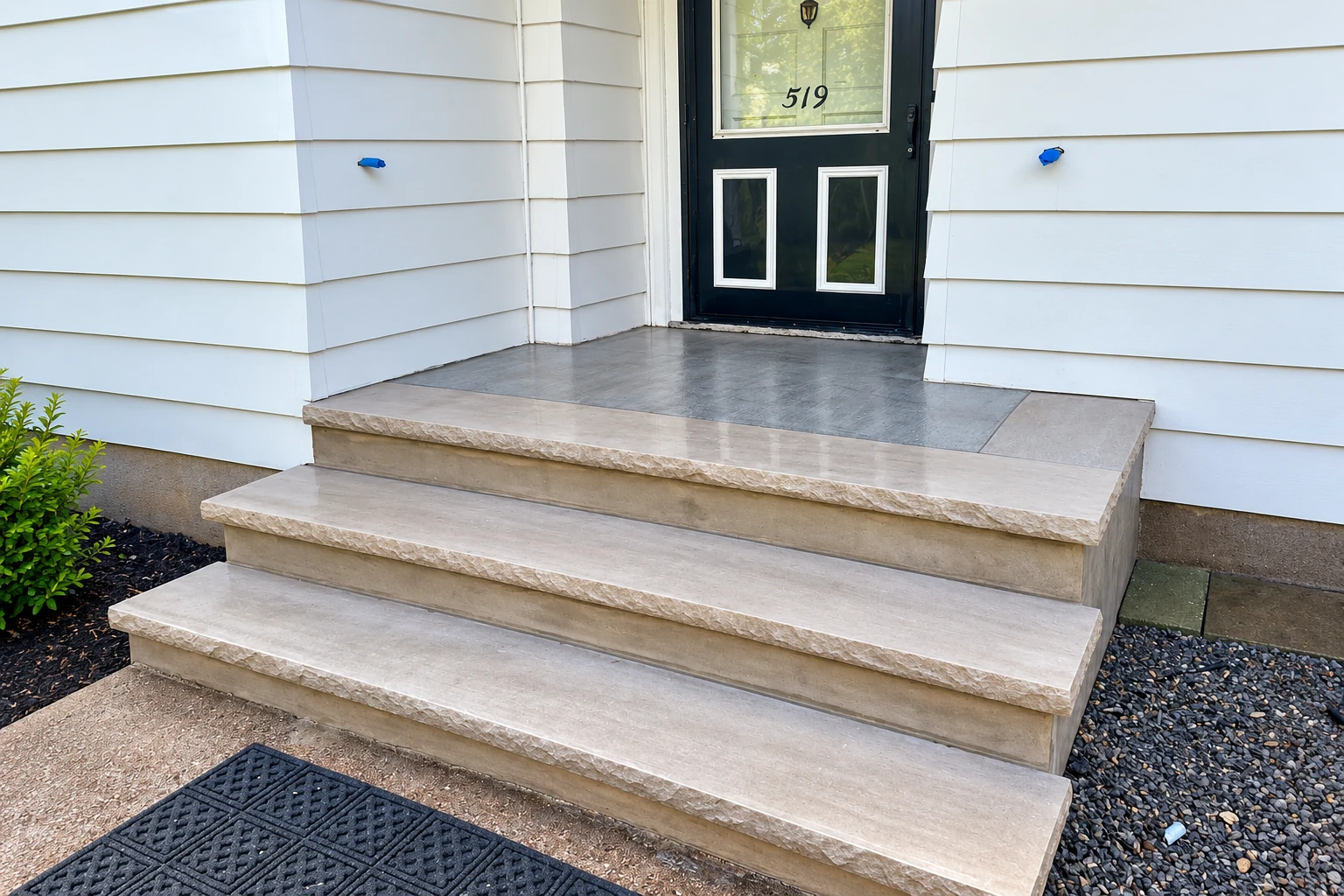
K&R Somerville Concrete Construction builds new concrete steps for homes in Somerville, MA, either poured in place at your house or set as precast units, so you get an even, solid way up to your door.
Most calls start with steps that have cracked, chipped along the edges or started to lean away from the house. The price mostly turns on precast or poured, how many steps and how wide, whether old steps come out first, and how hard it is to get materials onto a tight lot. The schedule turns on the permit, the weather and the cure, which is the wait while new concrete gains strength before you use it. I come out, measure and send you an estimate with your own figure.
I started this business in 2013, and steps are one of the jobs we're best known for on tight city lots, along with driveways, patios and foundation work.
I came back to concrete in 2013 to build things that stay put, and I relearned it slowly alongside people who never left it, so I'd rather check than guess.
Concrete is hard to undo once it sets, so I go over the size, the method and where the water will run with you before anything is ordered or poured.
We work on tight city lots where the neighbors are close, so we keep materials contained and leave the site cleaner than we found it.
Before anything is ordered, I walk you through precast or poured for your entry, which the questions below cover in more detail. Then I look at what the steps will sit on and where the water goes, because steps that tip toward the house send rain and meltwater right at your foundation. If the budget is tight, I'd rather spend it underneath than on a fancier top, because nobody sees the base on day one but everyone sees it once the steps start to settle.
On a poured set, our crew digs out, packs the base, builds the forms and sets rebar, the steel bars that help hold the concrete together if it cracks. We plan the pour for the cooler part of the day, since midday heat can leave a weak, dusty top, and we give the treads a broom finish, a light brushed texture that gives your feet some grip when it's wet. If your steps are part of a bigger job, like an addition on a new slab foundation or a full foundation installation, we plan them together so the entry lines up, and we line up any other licensed trades the job needs.
Planning matters in Somerville because the lots are tight. The city requires a Street Occupancy permit for any work on or under the public sidewalk or street, and for unloading materials or blocking the street, so we sort out early whether the truck and the job will need one. Construction hours in the city run 7 a.m. to 7 p.m. on weekdays and 9 a.m. to 7 p.m. on Saturday, and we keep the work inside them. We do the same work in Medford, Cambridge, Arlington and the other cities around Somerville.
The front steps take the most traffic and the most weather. We build new ones to fit your door and your walk so the way into the house feels even and steady again.
On tight city lots the back door often opens onto a narrow strip of yard. We plan the steps around fences, meters and the property line so the crew can work without crowding anyone.
Two- and three-family houses wear out their steps faster because every tenant uses them. Small landlords call us because they want one steady person handling the plan, the crew and the cleanup.
When the ground drops from the house to the yard or the driveway, a few concrete steps give you a solid path instead of a muddy slope, built to shed water away from the house.
Send the form and we'll reply within one business day to set a time. I'll come out, measure your entry, talk it through with you and then send a free estimate, with no obligation to book.
Send the address, how many steps you need, whether you live there and how many units the building has, because that decides who can get the permit.
I look at the entry myself, measure and talk through precast or poured with you before I write anything up, and I stay on the job through the work.
The estimate is yours to keep and compare with others. If the timing or the price doesn't suit you, that's fine, and you can take your time deciding.
These example photos show step finishes, edge details and entry layouts that we can talk through when we come look at your house.
These are the questions Somerville homeowners and landlords ask most before they book new concrete steps, answered plainly.
Concrete step installation in the Boston area usually costs about $220 to $650 per 4-foot-wide step. Where your job lands depends mostly on precast or poured, how wide and how many steps you need, and whether old steps have to come out first. I'll measure your entry and give you your own figure in the estimate.
Choose precast if price matters most and one of its sizes fits your entry, and poured if you need a size or shape precast doesn't come in. Precast steps cost less because they're hollow and easier to set, while poured steps cost more but come in a much wider range of sizes. I'll walk you through both on site.
If you own and live in a one- or two-family house, you can get the building permit yourself, but on a three-family or larger building a licensed contractor has to apply for it. Permits come from the city's building division. We check with that office early, file it when the paperwork is ours, and tell you what to bring when it's yours.
Yes, as long as the new concrete is kept from freezing in its first days. Concrete that freezes can lose more than half its potential strength and won't hold up, so the usual guidance is to protect it until about two days after it's placed. When our pour lands in cold weather, we cover and protect the new steps until they're safe from freezing.
With proper care, concrete steps last 30 to 40 years. Guidance written for slabs says using deicing chemicals sparingly lowers the risk of scaling, the flaking of the top surface. It also ties less scaling to dense concrete with entrained air, tiny bubbles mixed in, placed and cured with care, which is fair to ask any contractor about.
Yes, when the job is at an existing home you own and live in with one to four units, the state requires Home Improvement Contractor registration. Its general chart lists exterior stairs as needing that registration and a construction supervisor license, though rental and investment properties fall outside the registration law and needs vary, so check with the building official. We're fully licensed and insured.
Call (617) 284-0921 or send the form, because a quick look now gives us room to plan your pour around the cold weather.