Cracked or sinking driveways
When the old slab has dropped or split, we dig out far enough to see why before we pour again, so the new driveway doesn't repeat the same problem.
Cracked, sinking or puddling driveway? We plan the base and the runoff first, so the new slab sits flat and sheds water.
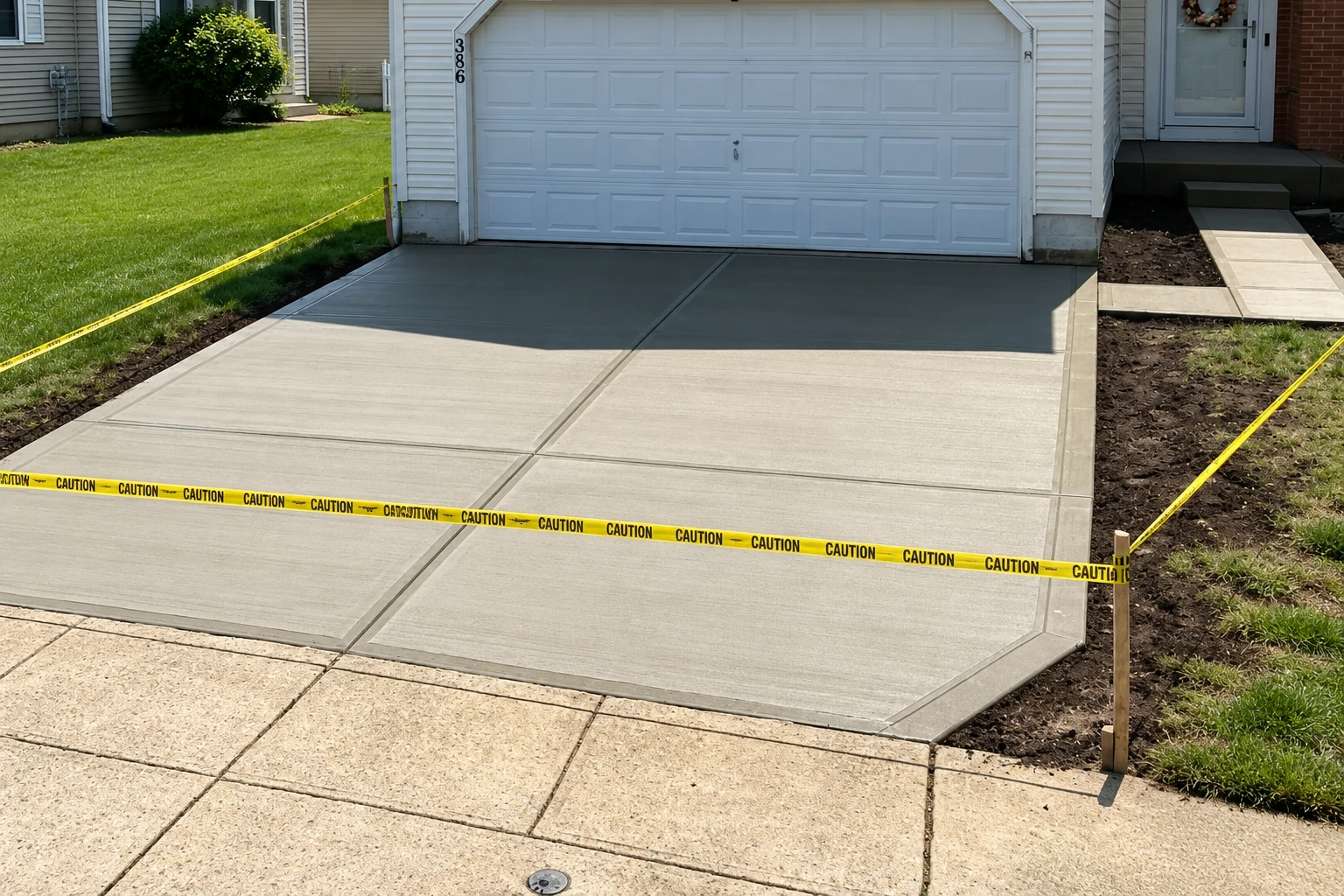
Concrete driveway building in Somerville means taking out the old surface, building a firm base and pouring a new slab that slopes so water runs off it and away from your house.
Most people call when the old driveway has cracked, sunk at one end or started holding water after a rain. The price moves with the size of the driveway, how much old pavement and soft fill has to come out, how thick the slab needs to be and how the runoff gets handled, and the schedule mostly turns on the permit and the weather. I come out, measure and talk it through with you, then send the estimate, so you get a figure for your own driveway instead of a guess.
We're fully licensed and insured, and we check with the city early on every driveway, before we settle the plan, because on a Somerville lot the rules about surface and runoff can change what we build.
I look at the job myself and stay on it through the work, while our crew does the digging, forming, pouring and finishing, so you have one steady person to deal with.
Concrete is hard to undo, so we spend the extra time on what's under the slab and where the water goes, because that's the part nobody can fix after the pour.
We leave the site cleaner than we found it and keep the work tidy on a tight street, so you're still on good terms with the neighbors when we pack up.
We're based in Somerville and work across the cities around it, where lots are tight, so the first question on a driveway isn't the pour. It's what surface the lot can take and where the runoff ends up, and I work that out with you and the city before we talk about pouring anything. The city lets you handle driveway runoff by sending it to a landscaped area at least half the size of the paving, into a drywell, which is a pit that stores runoff, or with 1 square foot of permeable pavement for every 5 square feet you pave. A new or wider driveway needs twice that, or an engineer to study it further, and the zoning text lets a driveway run up to twelve feet wide and keeps it out of the space between the house and the front lot line.
Then we dig out the old pavement and the soft dirt under it instead of raking it level, and pack the subgrade, the ground the slab sits on, so it doesn't settle with the dirt later. We set the forms so the slab falls away from your house, and we pour in the cooler part of the day, because midday heat leaves a weak, dusty top. Concrete can still crack, so we cut control joints, shallow grooves that give it a straight place to crack, before it picks its own spot. A broom finish, fine lines dragged across the wet surface, gives tires and boots some grip, and then we let the slab cure, the slow hardening that gives it strength, before anyone uses it.
When a budget gets tight, the base is the first thing people want to trim, because nobody sees it on day one. I'd rather trim the finish, since a plain broom finish on a packed base is a better driveway than a fancy surface on raked dirt. If you want pattern or color later, our stamped concrete services cover that, and plenty of owners use the same drainage plan for concrete patio construction out back.
When the old slab has dropped or split, we dig out far enough to see why before we pour again, so the new driveway doesn't repeat the same problem.
On a tight lot with hardly any lawn, where the water goes decides the surface. We lay out the options with you before anyone settles on solid concrete.
Small landlords call us for driveways tenants park on every day. We plan the work around who needs to get in and out, and you deal with one person throughout.
Many driveways meet front steps or a walk that cracked along with them. We can handle that concrete in the same job, so the levels and the drainage line up.
Send the form and we'll reply within one business day to set a time. I'll come out, measure and talk it through with you, then send the estimate. It's free, with no obligation.
A rough length and width is enough to start. I'll measure properly on site, but it helps me plan the visit and the questions to ask the city.
Tell us where puddles sit and where rain runs after a storm, because on a city lot that decides which surface fits before anything else does.
Let us know if delivery trucks use the driveway and when you'd like it built, since both change the slab and how we plan around the weather.
These example photos show broom finishes, borders, stamped patterns and driveway layouts we can talk through when we look at your lot together.
These are the questions Somerville homeowners ask most before a driveway pour, answered from the city's rules and the trade's own guidance.
Yes. Somerville's Engineering Division issues a Driveway & Pavement Permit to build, repave, expand or remove a driveway, and for curb cut work, and the city's driveway permit brochure explains it. We check with the city early on every job. When the paperwork is ours to file, we file it and keep it moving, and when it's yours, we tell you what to bring.
It can be, if the slab is graded to send its runoff onto permeable ground on your lot, or if the City Engineer grants a waiver. Otherwise the city's zoning text calls for paving stones, grass pavers, porous asphalt or pervious concrete, a mix that lets water through. That's where the runoff plan above comes in, and we check your lot with the city early.
One industry guide recommends at least 4 inches of concrete, and at least 5 inches when delivery vehicles use the driveway. If oil trucks, lumber or other heavy deliveries come up your driveway, plan for the thicker slab. I'll ask about that on site, because the extra inch is easy to pour now and can't be added later.
Driveway guidance says a new slab can take traffic after 7 days of curing, or sooner when testing confirms the concrete has reached enough strength. So plan on parking somewhere else for about a week after the pour. We'll let you know when it's ready, so nobody pulls in early.
Yes, but only on ground that isn't frozen, and the concrete has to stay protected from freezing until about two days after it's placed. Fresh concrete that freezes can lose more than 50% of its potential strength and won't hold up. That's why we ask your hoped-for month, so a cold-weather pour gets that protection planned ahead.
Pay attention to the mix and the upkeep. Entrained air, tiny bubbles spread through the concrete, gives it room to relieve pressure as it freezes, so it's fair to ask whether your mix has it. A penetrating sealer keeps out water and deicing salt and typically needs reapplying every three to five years, and one concrete trade group advises keeping calcium-based and magnesium-based deicers off it.
Call (617) 284-0921 or send the form early, so the permit and runoff plan are settled before the month you want to build.