Flat ground on a sloped lot
On a small city lot, a wall can turn a slope you can't use into a level patch for a garden, a play area or a place to sit.
Slope creeping into your yard, or an old wall starting to lean? We pour a concrete wall with a clear path for water behind it.
In Somerville, a concrete retaining wall is one we pour in place on your lot to hold back a slope, with steel inside it and a drainage path behind it so water doesn't build up and push on it. We're based in Somerville and build these walls for homeowners and small landlords across the cities around it.
Most of the walls I'm asked about hold back a slope that's started to slide, or replace an old wall that's leaning. The price moves with the wall's length and height, how much digging and drainage it needs, and how easy it is to get forms and concrete into a tight yard. The schedule turns on the permit and on the wait before soil can go back behind new concrete. I'll come out, measure, talk it through with you and then send the estimate for your wall.
We're fully licensed and insured, and when we apply for a Somerville building permit we submit a construction supervisor license, plus a home improvement contractor registration on owner-occupied homes with one to four units.
I come out to look at the job myself and I stay on it through the work, so you have one steady person to call the whole way.
I've run this business since 2013, and concrete is hard to undo, so I'd rather spend extra time on the footing and where the water goes than come back to a problem later.
Before we pour, I walk you through the wall's height, its drainage and when the soil goes back, so you know what we're building and why.
We start by digging out for the footing, the wide base the wall stands on, and we take it down below where the ground freezes so frost doesn't lift it. Then our crew builds the forms, sets the rebar, the steel bars that help the wall resist the soil pushing on it, and pours the wall.
A poured wall stays standing when the water behind it has somewhere to go, so we build a clear drainage path into it before any soil goes back. Then we wait. Fresh concrete keeps gaining strength after the pour, so we give the wall time before we backfill, which is putting the soil back behind it, because backfilling too soon puts the full weight of the slope on concrete that isn't ready for it.
If the wall is part of a bigger plan, like leveling a yard for one of our concrete pool decks or a concrete floor installation in a garage or shed set into the slope, I plan them together so the grades and drainage line up. We keep to the city's construction hours, 7 a.m. to 7 p.m. on weekdays and 9 a.m. to 7 p.m. on Saturdays, and we leave the site cleaner than we found it, because you still have to live next to your neighbors.
On a small city lot, a wall can turn a slope you can't use into a level patch for a garden, a play area or a place to sit.
An old wall that leans has usually had water and soil pushing behind it for years, so we take it out and rebuild with drainage behind the new one.
When a driveway or walkway runs along a drop, the ground under its edge can wash out, and a wall keeps that soil where the slab needs it.
Where a hill comes down toward the back of a house, a wall holds the soil back, and we plan where its water goes so it isn't sent toward your foundation.
Send the form and we'll reply within one business day to set up a visit. I'll come out, measure, talk the wall through with you and then send a free estimate, with no pressure to book.
I measure the slope, look at where the water runs now and check how we'll get forms and concrete into the yard, because all three shape the estimate.
Our crew does the digging, forming, pouring and finishing, and we line up the other licensed trades the job needs, so you aren't juggling schedules yourself.
That's our promise on every wall we build, and it's why I'd rather settle every question about the plan with you before the pour than after it.
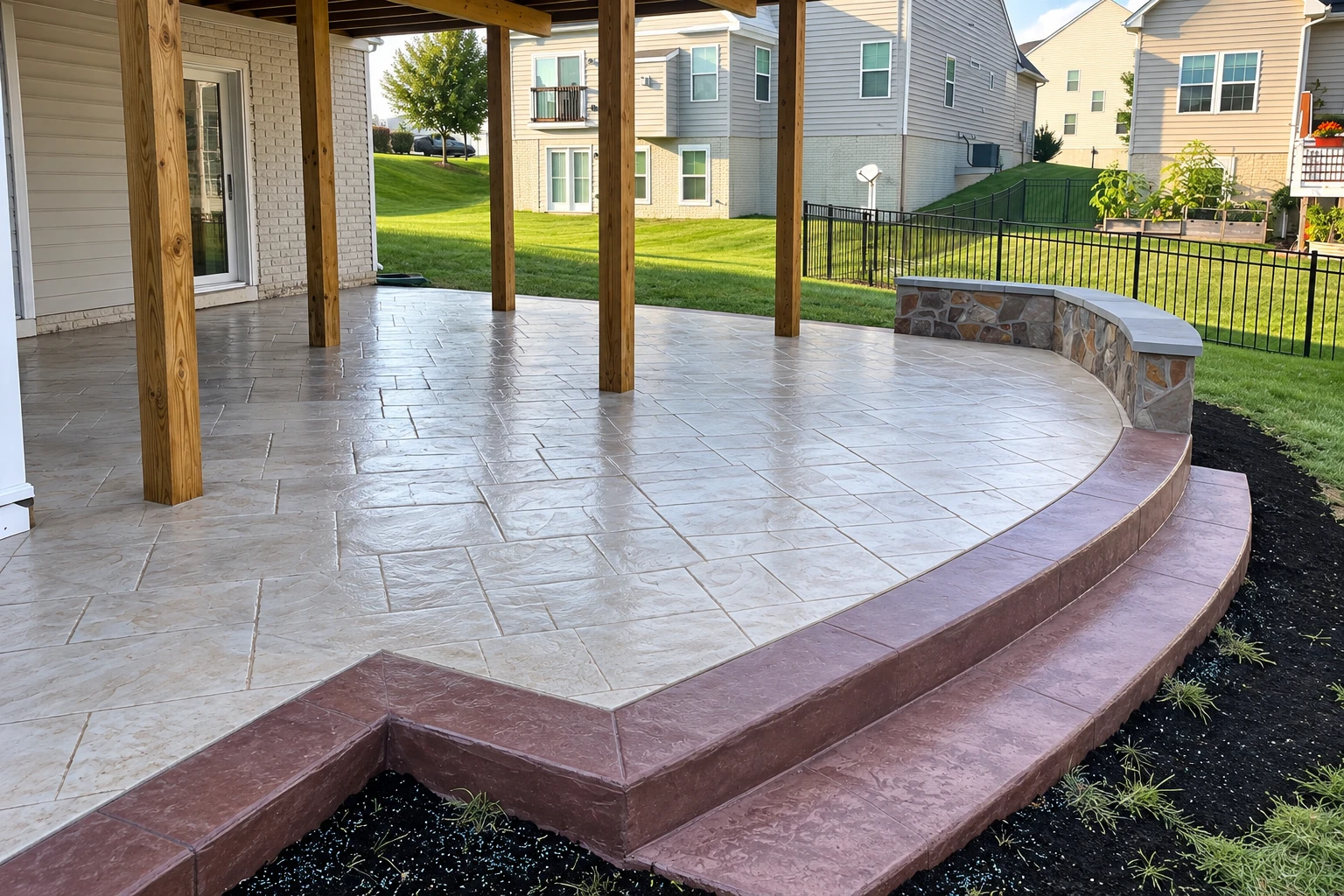
These photos show finishes, heights and layouts to talk over, from smooth wall faces to walls that step down beside patios and stairs.
These are the questions Somerville homeowners usually ask me about poured retaining walls, answered the way I'd answer them in your yard.
Often it is. One technical comparison favors poured concrete near a property line, because the reinforcement a block wall needs can't extend into a neighbor's property. A poured wall can use a cantilever design, which holds the soil from its own footing, or tiebacks, anchors set back into the ground. I'll look at where your lot line runs before we settle the design.
Usually through a layer of clean gravel or crushed stone against the back of the wall, which gives water a path down so the pressure on the wall stays low. Weep holes, small openings low in the wall, are only a backup, since they can clog or freeze. When you're comparing quotes, ask each contractor how they drain the wall.
Plan on needing one. The city requires building permits for all interior and exterior work, and its list of exceptions names painting, tiling and flooring, not retaining walls. We check with the city's building office before we settle the plan and file it when it's ours. If you live in your own one or two family home, you can pull it yourself, and we'll tell you what to bring.
A concrete retaining wall in the Boston area usually costs about $31 to $97 per square foot. That's the usual price of the work around here, not our price, and where your wall lands in it depends on its size, access and drainage. I'll measure your wall on site and send an estimate with your own number.
No, a poured wall needs time before the soil goes back behind it. Block walls are at full strength as soon as they're made and can be backfilled right away, but concrete poured on site keeps gaining strength after the pour. If your schedule is tight, plan for that wait, and I'll show you where it falls when we go over the plan.
Call (617) 284-0921 or use the form, with photos of the slope, its rough size and whether you live there, since that changes the permit paperwork.